
Let's talk about AI, authenticity and the privilege of writing well
Share this article
 LinkedIn
Date posted
20th May 2026
When I was a teenager, my grandfather suggested I write to him. I took the task seriously, spending hours drafting the letter, carefully choosing my words. And I was proud of what I had written. So, when an envelope arrived a week or so later with his familiar handwriting on the front, I was thrilled. Finally, a reply. I tore it open eagerly.
But instead of a letter back, I found my own words returned to me – crossed out, corrected and covered in red ink. Every margin filled with notes.
I was devastated. My work hadn’t been acknowledged; it had been dissected.
Furious, I ripped the letter up and vowed never to write to him again. A year later, he died. And I’ve carried the regret of that moment ever since.
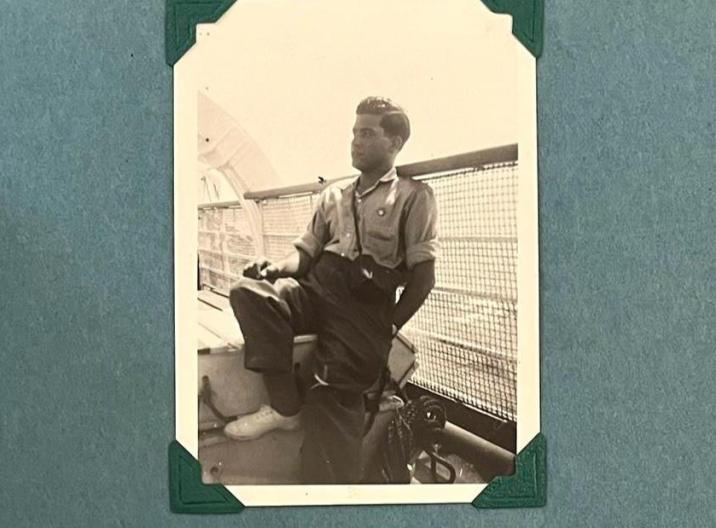
It took me years to understand what my younger self couldn’t. My grandfather wasn’t trying to be cruel. He was being a teacher – because that was who he was.
He grew up in wartime Malta, contracted polio and came to the UK in search of better healthcare. Here, he immersed himself in British culture wherever he could and ultimately taught English in Wembley. For him, language wasn’t simply communication. It was identity, belonging and pride. He wanted his grandchildren to respect it too, because he believed it would open doors for us.
Ironically, I now make my living through words. I never went to university, but in my 30s I rediscovered writing through executive search – and I think I am good at it.
Even so, I increasingly use AI to review and refine what I write.
My grandfather would probably have hated that. But I think he would have been wrong.
AI is already embedded within job applications, yet there is a growing culture of recruiters and hiring managers claiming they can “spot” AI-generated answers, as though using it is evidence of laziness or deception.
But writing well is a privilege. Not everyone had access to a good education or the opportunities that help build confidence in written communication. For dyslexic people, AI can be an important accessibility tool. Others simply struggle to express themselves confidently in writing, despite being exceptional at what they do.
For many people, AI is not a shortcut. It is an enabler.
And perhaps the bigger issue is not whether candidates use AI at all, but how few opportunities we actually give people to tell their story. For something so fundamentally built on human relationships, recruitment remains strangely faceless. A CV. Occasionally a cover letter. Perhaps a handful of application questions intended to be inclusive but still judged through somebody else’s subjective lens. That is hardly a fair measure of potential.
If we want truly inclusive recruitment, we need to create more ways for people to connect with organisations as human beings. Invite conversations; informal interactions; spaces where candidates feel safe enough to explain the experiences that shaped them and the journey they have been on.
Only then can we properly judge someone’s ability to contribute authentically. AI does not erase authenticity. Used well, it can help reveal it.
So perhaps instead of dismissing candidates for using AI, we should be asking ourselves a different question: what more can we do to hear the person behind the words?
Share this article
 LinkedIn
More Insights
-
 Insights
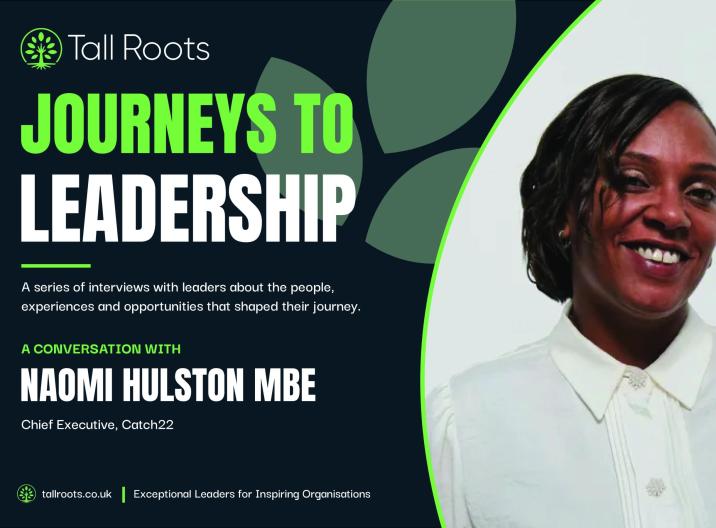
Journeys to Leadership: Naomi Hulston MBE, CEO of Catch22
- Read more
-
Date posted
14th October 2026
